.png)
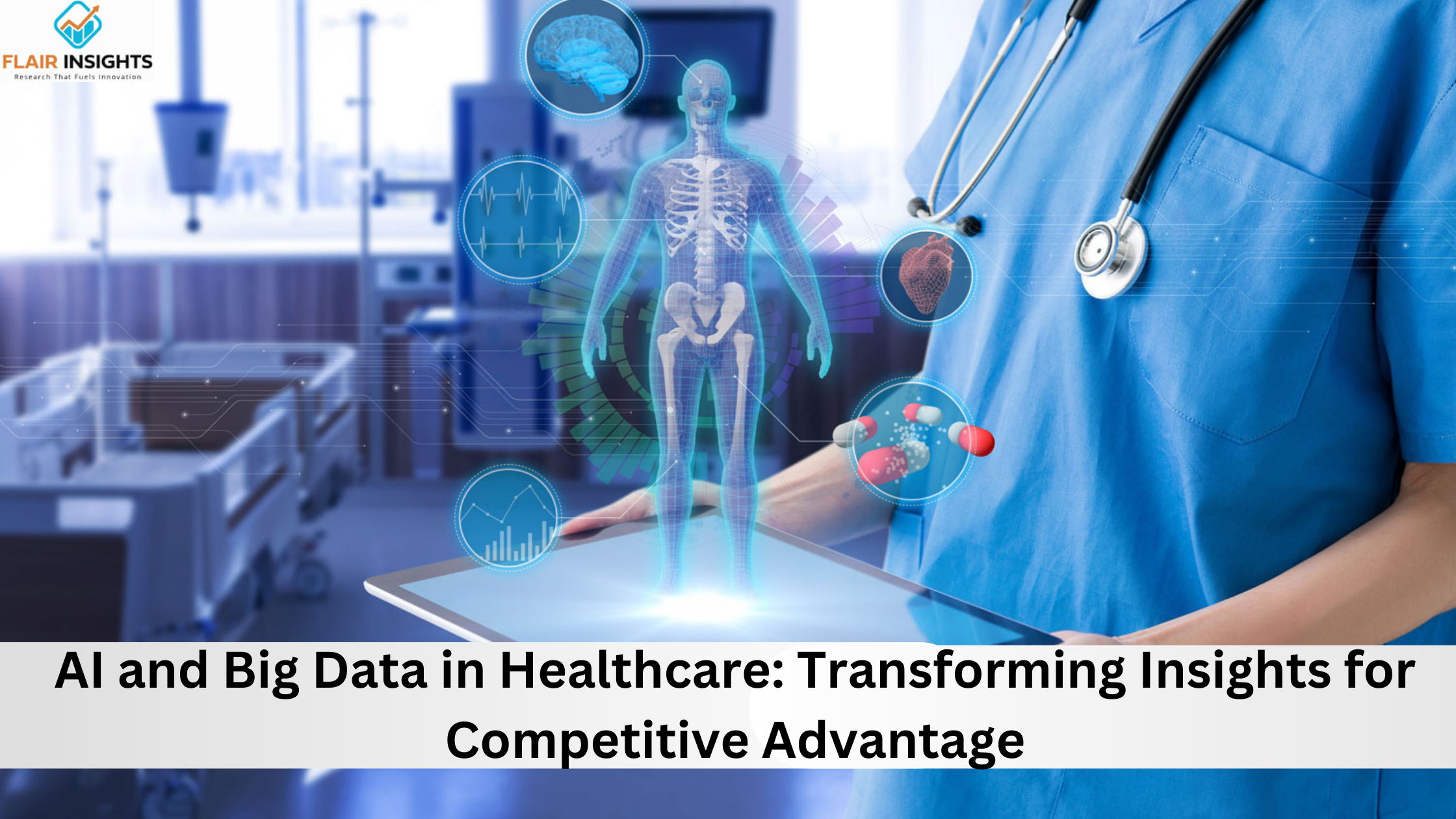
In the rapidly shifting healthcare landscape, the interplay of Artificial Intelligence and Big Data may be the disruptive innovation that reshapes the way healthcare related organizations operate and provide services. Such combinations of complementary technologies have the potential of unlocking unprecedented insights from data, leading to new patient outcomes and enhanced operational efficiencies for an edge in the competitive landscape of healthcare services.
1. Healthcare Information Explosion:
Digital health, however, is witnessing an unprecedented explosion in data originating from various sources, such as electronic women health records, medical images, genomics data, wearables and many more. Caring for and gleaning insights from such a massive volume of data has been a challenge for the traditional approaches. This is where Big Data comes into play to save the day, as healthcare organizations can now effectively store, process, and draw useful insights from large amounts of information.
2. AI for Enhanced Diagnostic Accuracy:
Machine learning under AI has great potential in improving the accuracy of clinical diagnoses. Algorithms can analyze the medical images and detect any patterns or any abnormalities at a superhuman level of precision. For instance, AI-powered diagnostic tools can aid radiologists in the analysis of medical images of early signs of diseases and therefore assist in the acceleration along with accuracy in the process of diagnosis.
3. Predictive Analytics for Proactive Healthcare:
There is the potential of AI together with Big Data to result in predictive analytics, a great tool in proactive healthcare. The healthcare organizations can use it to predict the outbreak of diseases, identify individuals at high risk and take prevention steps. Not only this help in increasing the outcome for the patients but the extra burden of extensive and costly treatments would also not fall on the healthcare system.
4. Personalized Medicine and Genomics:
This brings personalized medicine, where treatments are based on a person's genome, now possible with the integration of AI and Big Data analysis. Standalone genomic data can now be brought together with AI algorithms to identify genetic markers for specific conditions that can allow effective, precise treatment design. This puts treatment far more on a sound basis than traditional one size fits all methods and promises the ability to approach the efficacy of treatments while minimizing the attached negative side effects.
5. Operational Efficiency and Cost Reduction:
Besides the clinical applications, AI and Big Data also enhance the operational efficiency and reduce costs of healthcare organizations. Predictive analytics might help in smarter allocation of resources to minimize bottlenecks and enhance workflow. Automation of administrative work, using AI, shall leave healthcare professionals with the time to spend with their patients. This will not only enhance overall efficiency but also reduce costs.
6. Better drug discovery and development:
Drug research can be significantly accelerated through AI, which analyzes vast data sets to determine possible therapeutic candidates. Machine learning algorithms predict the efficiency of compounds, therefore reducing the time and cost needed for traditional development processes. This approach changes the way researchers work, helping them explore more possibilities and get novel treatments to the market much faster.
7. Ethical Considerations and Responsible AI:
While many apparent benefits of AI and Big Data in healthcare are evident, several challenges are also raised. Key among these critical considerations are concerns around the privacy and security of data, interoperability issues and the ethical considerations of AI in decision-making. In this regard, maintaining a balance between the need to promote innovation and ensuring that the best interest of the patient is protected is critical toward the fulfillment of these technologies' potential.
For a healthcare organization, this successful use of AI and Big Data results in a major competitive advantage: the ability to provide more accurate diagnosis, the ability to offer personalized treatment, and proactive health care services. Further, operational efficiency with cost effectiveness helps in sustainable growth and better satisfaction of patients, making the concerned organization more competitive in the market.
9. The Road Ahead:
The integration of AI and Big Data in healthcare is an ongoing process with a lot of potentials for further advancements in the future. The advancements of these technologies require healthcare organizations to invest not only in the core technologies themselves but also in talent, infrastructure, and other investment areas around them. It is important that stakeholders, researchers and policymakers work together to help AI and Big Data navigate the landscape in a way that fosters positive outcomes for a growing healthcare ecosystem.
Conclusion
How AI and big data are beginning to reshape the healthcare landscape, opening unparalleled opportunities to enhance patient outcomes, operational efficiency and competitive advantage. More leverages of these technologies in the industry will increase the opportunity to meet such challenges in a responsible and ethical way. The health sector is on the brink of a revolution with the wise use of data, and institutions turning toward AI and Big Data are not going to see a change in their own selves alone but will also be at the helm of affairs in the delivery of quality health care to patients.
Trending Posts
The Future of Artificial Intelligence
In recent years, the field of artificial intelligence (AI) has witnessed unprecedented growth and transformative advancements. As AI technologies

Global Silver Nanoparticles Market
The global silver nanoparticles market was valued at $2.08 billion in 2020, and is projected to reach $4.1 billion by 2027, growing at a CAGR of ~17%

Vaccination: Vaccination Against Measles is Now Mandatory in Germany
The subject of compulsory vaccination has always heated peoples minds and caused emotionally charged discussions. The latest law in this area - the ob

Sailing into the future with Autonomous Ships
Autonomous Vehicles (AVs) are the uproar of this era. After airways, thanks to the companies like Tesla, that people are now getting used to see drive

The Basic Pension Comes - Federal Cabinet Decides On the Pension Supplement
Financial security in old age is an issue that is causing stomach pains for more and more people in Germany. Low-wage earners fear the elderly. The ba

"LNG Bunkering" Here is something you must know!
In the current scenario of growing pollution, companies are trying to adapt more and more sustainable approach that not only gives eco-friendly result

Fact check on UV Disinfection for COVID-19
Many regulatory authorities and bodies believe that UV disinfection technologies can play a role in a multiple barrier approach to reducing the transm

Rapidly growing IT industry coupled with the trend of bringing your own device (BYOD) is expected to provide new opportunities for growth of Cloud Collaboration
Cloud collaboration is the process of sharing and co-authoring the computer-based work through cloud technology

Rising Demand For Uninterrupted Power Supply Is Expected To Drive The Power Rental Market
Todays world is totally reliant on electric power. There are many things which are not manageable without electricity. Power rental is a concept where

The Global Ventilator Market Grows at a CAGR of 7.75 %
The Global Ventilator Market, which was at $688 million in the year 2016, is about to double by the year 2025, and reach a value of $1,347 million. Th
Recent Posts

The Wellness Renaissance: Gen Z and Millennials Drive the Next Wave of Consumer Innovation
The wellness landscape is undergoing a generational transformation. No longer a domain reserved for luxury or corrective health, wellness has become a foundational lifestyle

Diabetes Prevention: A Strategic Imperative for Economic and Market Growth
As global economies grapple with the dual challenges of maintaining workforce productivity and controlling public health costs, the rise of diabetes—particularly type 2—has emerged as a silent disruptor.

How Drones Are Reshaping the Future of Modern Warfare
The contemporary battlefield is undergoing a paradigm shift, driven not by sheer manpower or conventional firepower, but by the silent hum of Unmanned Aerial Vehicles (UAVs)

Adapting to Gen Z: Strategies for Retail Success in the Digital Age
Generation Z—individuals born between 1997 and 2012—is fast becoming the most influential cohort in the consumer marketplace.

Cross-Border Conflict and Economic Instability in South Asia
In 2025, the subcontinent witnessed a perilous turn in India-Pakistan relations following a deadly terrorist incident in Pahalgam, which claimed 26 lives.

Transforming Market Research: The Strategic Impact of Generative AI
In a data-driven economy, market research has become a mission-critical function for organizations seeking sustained growth.

Gold at Historic Highs in 2025: Strategic Implications of a Flight to Safety
Gold has reached unprecedented valuation levels in 2025, crossing $3,175 per ounce globally and nearing ₹94,000 per 10 grams in India—a 23% increase year-to-date

The Escalating U.S.-China Trade War: Strategic Implications for the Global Economy in 2025
In 2025, the U.S.-China trade war has reached an inflection point, introducing heightened complexity and volatility into the global economic system.

Tariffs & Trade: Key Trends, Policies, and Market Impact
A tariff is a tax imposed by a government on imported or exported goods. It is primarily used to regulate international trade by either encouraging domestic production or generating revenue for the government.

The Global Buy Now Pay Later (BNPL) Market: Growth and Opportunities
The global Buy Now Pay Later (BNPL) market has emerged as a revolutionary financial solution, transforming how consumers approach shopping and payments. Offering flexibility and convenience, BNPL allows consumers to make purchases and pay.