.png)
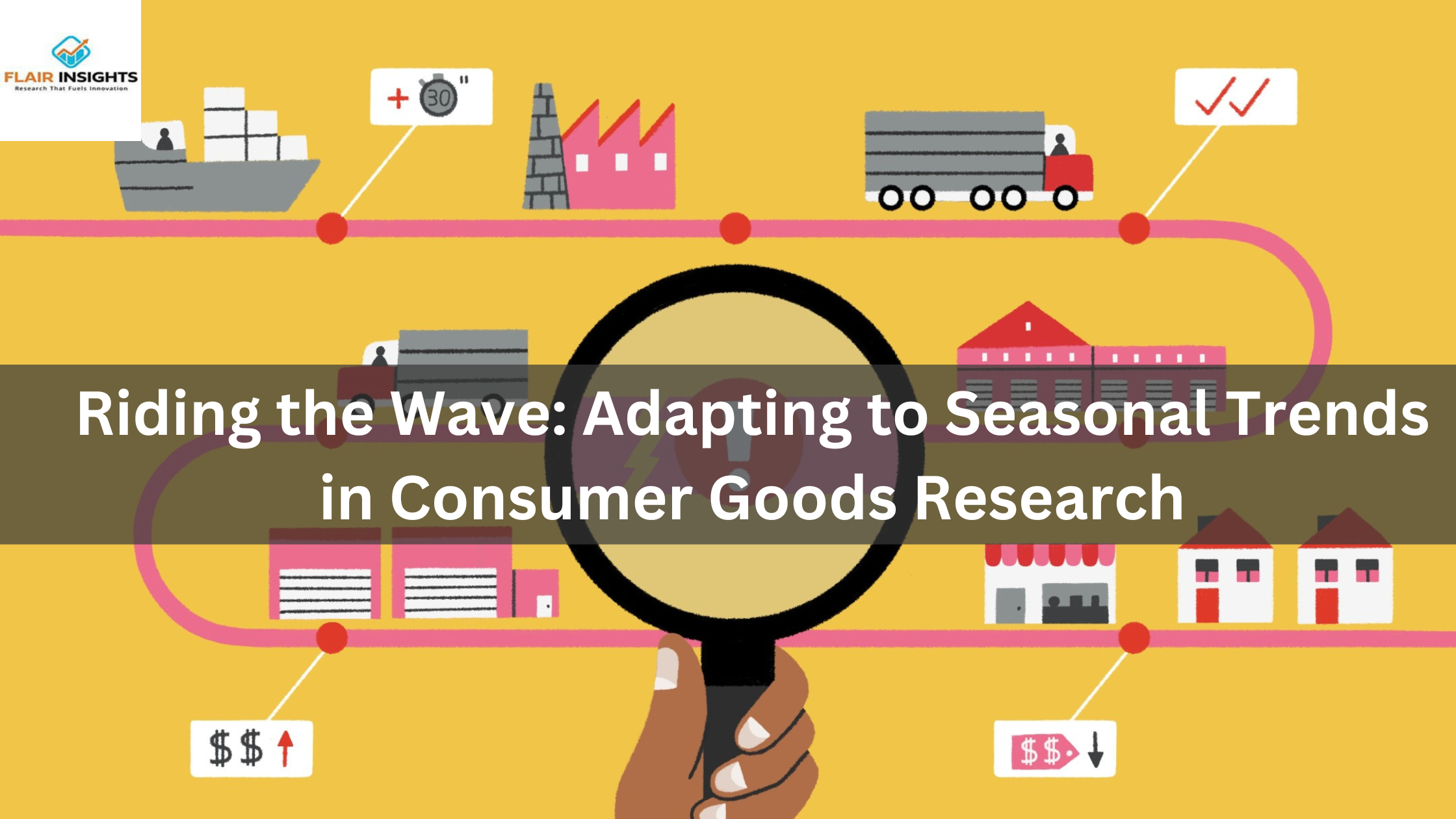
With many fast changes in the consumer products landscape, the direction is to rise above the competition. One thing that can easily bring businesses to the tipping point is seasonality. These waves dictate consumer preference and are either a determinant or influencing factor in purchasing, which is why it is utmost necessary for businesses to adapt and ride through these waves on top. With seasonality in consumer goods research, we try to understand the importance and adaptation of trends in different seasons. Herein, the paper explores strategies that can assist a business in navigating the dynamic marketplace.
Understanding the Dynamics of Seasonal Trends:
Consumer behavior is never constant; it changes due to various factors, including climatic changes, holidays, and cultural events. These trends should be recognized and understood to provide an insight to the businesses in order to act accordingly.
1. Weather-Driven Trends:
Weather changes tend to have a much more significant bearing on overall consumer preferences. For example, there is a higher demand for warm clothes, heaters, and comfort food during the colder months and vice versa in summer. Advanced research from past records and predictive analytics will assist a business to forecast these changes in time, thereby planning in advance for changes in their production or inventory management.
Business needs to realize its strategic partnership potential with meteorological service to get real-time weather data. A business can, therefore, come up with more accurate analytics about what people may need by integrating weather forecasts into such analytic tools, based on which it will prepare to satisfy their demand
2. Holiday and Cultural Events:
Holidays and other cultural events are very influential in consumer spending. Be it the back-to-school season or festive holidays and special events, consumers tend to adjust their purchasing behavior according to the occasion. Businesses should keep a tab on the various cultural calendars and plan marketing campaigns, promotions, and product launches accordingly to make the most of the heightened consumer activity during such periods.
For instance, take the example of the Back-to-School season, in which firms make a killing by offering deep discounts on school supplies, clothes, and even electronics. It is the timing, along with several other preferences associated with events like these, that help firms in crafting fine-tuned offers and messages
Adapting to Seasonal Trends:
In that case, after a deeper understanding of seasonal trends is achieved, this will mean the next step in the process is to modify one's strategy to keep up with changing consumer demand. This shall incorporate a multi-dimensional approach that entails product development, marketing, and supply chain management.
1. Agile Product Development:
The cashing in on seasonal trends requires an agile product development process to do so. It involves how flexible one should be to design and launch products according to the present demands in the market. Keeping a pulse on changing consumer behavior and tastes, businesses must spring into action with new products or adjustments in view of the unique needs at each season.
Bringing design thinking experts to the forefront can increase the speed of prototyping and iteration; therefore, businesses can quickly get products to market. Cultivating an innovation culture will allow companies to turn around fast enough in reaction to changing consumer preferences, thereby making a difference in their response vis-à-vis competition.
2. Strategic Marketing Campaigns:
Season-specific marketing campaigns are important in terms of capturing the attention of consumers. Advertising messages, visuals, and promotions should be tailored to reverberate with the season at hand. From social media to email marketing to influencer collaborations, there are so many ways to amplify efforts to really stay in customers' minds during peak seasons.
Moreover, individual customer data can be used to drive personalized marketing strategies. Applying machine learning algorithms to past interactions and purchasing behavior creates very focused campaigns that businesses can design in order to effectively communicate with target segments.
3. Optimized Supply Chain Management:
Supply chains should respond and be optimized to take on those changing demands outlined by seasonal trends. This implies the need for close collaboration with suppliers to ensure that inventory levels are commensurate with the expected demand. Most importantly, embracing real-time analytics and tools for demand forecasting can have a huge impact in improving effectiveness throughout the supply chain and, more importantly, significantly reducing overstock and stockouts.
Just-in-time inventory systems and close, concerted relationships with suppliers could help amidst changing demand. In a scenario where peak seasons are a factor, blockchain technology would integrate into supply chain management to provide the much-required transparency and traceability that become significant in times of risk management.
4. Data-Driven Decision Making:
Mastering the power of your data is how you are ultimately going to ride seasonal trends. Businesses must invest in strong analytics tools that will offer meaningful insights regarding customer behavior, preferences, and purchasing patterns. It is through the trends in data that you can make an informed decision to be one step ahead in adapting to the changing consumer landscape.
Advanced analytics, powered by machine learning and artificial intelligence, offers predictive modeling to compute trends more precisely. With constant analysis of data and learning from it, the strategies will be refined over time, hence assuring a data-driven and adaptive approach toward seasonal trends.
Case Studies:
To illustrate the effectiveness of adapting to seasonal trends, let's examine a couple of case studies.
1. Clothing Retailer:
A clothing retailer times new products in sync with the change of seasons. With winter around the corner and warm clothes struggling in the market, they put out a winter collection weeks before. Now, besides the consumer's needs being met, it gives the retailer a lucrative opportunity to make hay while the sun shines for those early birds looking to get their hands on seasonal discounts.
Besides, it bases on customer feedback and reviews to fine-tune the designs for the next season, which therefore has some element of continuous improvement based on the preference of consumers.
2. Food and Beverage Industry:
A limited summer drink has just been released by a beverage company, which inadvertently turns out opportune for the warmer months of the year. This company makes the most of that summer beverage trend with a well-planned, targeted social media campaign focused on refreshing qualities and enjoyment outdoors. That is an approach which generates both time-to-market and personalized value, leading to an increase in sales during this peak season.
This forms the base for the company's seasonal variations, wherein consumers look out for products that come with each season. It is what will create, year after year, a certain kind of anticipation by the customers toward new products. The ability to keep seasonal tastes has not only increased short-term sales but also cultivated brand loyalty in the long term.
Conclusion:
In the fast-moving world of consumer goods, moving with seasonal trends is not a strategy; it's imperative for long-term success. Any company that invests in the understanding of consumer behavior dynamics, embracing agility in product development, and optimization of marketing efforts coupled with supply chain operations will find itself riding on the wave of seasonal trends rather than being swept over by it. This allows businesses to remain attuned to the rhythm of the market and, against rich consumer expectations, foster long-lasting success moving into the future.
Trending Posts

The Future of Artificial Intelligence
In recent years, the field of artificial intelligence (AI) has witnessed unprecedented growth and transformative advancements. As AI technologies

Global Silver Nanoparticles Market
The global silver nanoparticles market was valued at $2.08 billion in 2020, and is projected to reach $4.1 billion by 2027, growing at a CAGR of ~17%

Vaccination: Vaccination Against Measles is Now Mandatory in Germany
The subject of compulsory vaccination has always heated peoples minds and caused emotionally charged discussions. The latest law in this area - the ob

Sailing into the future with Autonomous Ships
Autonomous Vehicles (AVs) are the uproar of this era. After airways, thanks to the companies like Tesla, that people are now getting used to see drive

The Basic Pension Comes - Federal Cabinet Decides On the Pension Supplement
Financial security in old age is an issue that is causing stomach pains for more and more people in Germany. Low-wage earners fear the elderly. The ba

"LNG Bunkering" Here is something you must know!
In the current scenario of growing pollution, companies are trying to adapt more and more sustainable approach that not only gives eco-friendly result

Fact check on UV Disinfection for COVID-19
Many regulatory authorities and bodies believe that UV disinfection technologies can play a role in a multiple barrier approach to reducing the transm

Rapidly growing IT industry coupled with the trend of bringing your own device (BYOD) is expected to provide new opportunities for growth of Cloud Collaboration
Cloud collaboration is the process of sharing and co-authoring the computer-based work through cloud technology

Rising Demand For Uninterrupted Power Supply Is Expected To Drive The Power Rental Market
Todays world is totally reliant on electric power. There are many things which are not manageable without electricity. Power rental is a concept where

The Global Ventilator Market Grows at a CAGR of 7.75 %
The Global Ventilator Market, which was at $688 million in the year 2016, is about to double by the year 2025, and reach a value of $1,347 million. Th
Recent Posts

The Wellness Renaissance: Gen Z and Millennials Drive the Next Wave of Consumer Innovation
The wellness landscape is undergoing a generational transformation. No longer a domain reserved for luxury or corrective health, wellness has become a foundational lifestyle

Diabetes Prevention: A Strategic Imperative for Economic and Market Growth
As global economies grapple with the dual challenges of maintaining workforce productivity and controlling public health costs, the rise of diabetes—particularly type 2—has emerged as a silent disruptor.

How Drones Are Reshaping the Future of Modern Warfare
The contemporary battlefield is undergoing a paradigm shift, driven not by sheer manpower or conventional firepower, but by the silent hum of Unmanned Aerial Vehicles (UAVs)

Adapting to Gen Z: Strategies for Retail Success in the Digital Age
Generation Z—individuals born between 1997 and 2012—is fast becoming the most influential cohort in the consumer marketplace.

Cross-Border Conflict and Economic Instability in South Asia
In 2025, the subcontinent witnessed a perilous turn in India-Pakistan relations following a deadly terrorist incident in Pahalgam, which claimed 26 lives.

Transforming Market Research: The Strategic Impact of Generative AI
In a data-driven economy, market research has become a mission-critical function for organizations seeking sustained growth.

Gold at Historic Highs in 2025: Strategic Implications of a Flight to Safety
Gold has reached unprecedented valuation levels in 2025, crossing $3,175 per ounce globally and nearing ₹94,000 per 10 grams in India—a 23% increase year-to-date

The Escalating U.S.-China Trade War: Strategic Implications for the Global Economy in 2025
In 2025, the U.S.-China trade war has reached an inflection point, introducing heightened complexity and volatility into the global economic system.
Tariffs & Trade: Key Trends, Policies, and Market Impact
A tariff is a tax imposed by a government on imported or exported goods. It is primarily used to regulate international trade by either encouraging domestic production or generating revenue for the government.

The Global Buy Now Pay Later (BNPL) Market: Growth and Opportunities
The global Buy Now Pay Later (BNPL) market has emerged as a revolutionary financial solution, transforming how consumers approach shopping and payments. Offering flexibility and convenience, BNPL allows consumers to make purchases and pay.