.png)
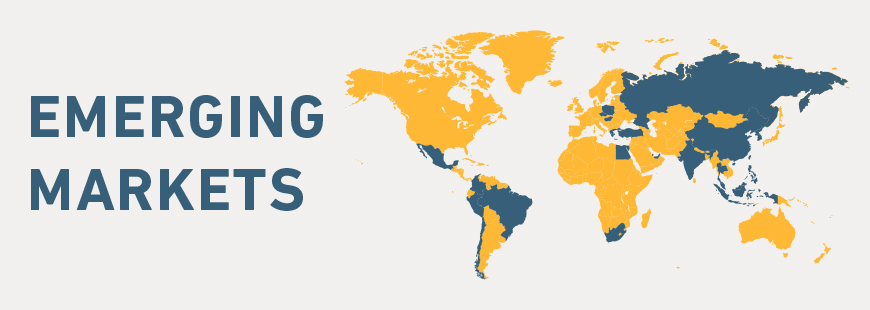
Emerging markets form the very epicenter of a global scenario that allows two way flows of opportunities and challenges in the Banking, Financial Services, and Insurance sector. Given the rapid economic growth pursued in these countries, the BFSI sector finds itself at the very forefront of the moving scenario, sailing through a plethora of different regulatory regimes, differing customer needs, and technological changes. The paper discusses the opportunities and challenges of the emerging markets that the BFSI sector faces, elaborating on strategies for growth and success.
1. Market Potential and Financial Inclusion
1.1 Unlocking Untapped Opportunities
Emerging markets are unparalleled opportunities for the sector, as they still remain largely underutilized in terms of their financial potential. This means that due to economic growth in such markets, demand for basic financial services like banking, insurance, and investment products will go up manifold. Now, tapping into this demand surge would help financial institutions unlock new revenue streams and build significant market presence.
1.2 Digital Transformation for Inclusion
Digital transformation acts as a driver of financial inclusion in emerging markets. With the help of digital technologies, like mobile banking and online platforms, BFSI firms are empowered to reach unbanked and underbanked populations. These technologies offer an accessible and convenient solution that dismantles the barriers to entry of those who were, hitherto, unable to use them, hence making it an all inclusive financial ecosystem.
1.3 Rising Middle-Class Impact on Wealth Management
The emergence of an aspiring new middle class across emerging markets heralds a shift in consumption patterns. Greater disposable incomes fuel demand for sophisticated wealth management services. Solution development that addresses the core financial aspirations of this market becomes a crucial strategy for BFSI institutions to build long term relationships and drive business growth.
2. Fintech Integration and Collaboration
2.1 Game-Changing Fintech Collaborations
Judicious integration of FinTech solutions in emerging markets can bridge trenchant gaps in the BFSI industry. Fintech startups basically bring innovation and agility to what are often considered lumbering financial services behemoths. It is through such collaboration that BFSI firms can infuse their service spectrum with advanced technologies like AI, blockchain, and data analytics to yield efficient and customer friendly solutions.
2.2 Enhancing Service Offerings
Collaboration with FinTech startups opens the potential for the BFSI institution to grow an augmented array of services, assimilation of digital payment solutions, automated advisory services, and streamlined customer experiences. This effectively allows it to offer more competitive and tech-savvy financial services to meet the changing needs of the consuming clientele in emerging markets.
2.3 Broader Customer Base through Fintech
Fintech partnerships are a gateway to new opportunities for the customer base of a BFSI firm. The cutting edge solution from these fintech startups was helping the tech savvy audience therefore, it increased the reach of the market far beyond traditional banking. Mobile banking apps, digital wallets, and online lending platforms have helped achieve large coverage of a very diversified customer base within emerging markets.
3. Cultural Nuances and Customer-Centric Approach
3.1 Understanding Cultural Nuances
Success belongs to those who understand the local culture in emerging markets. That means making financial product and service offerings relevant to the values and preferences of diverse populations by customizing them according to cultural nuances. This sensitivity builds trust and strengthens the relationship of BFSI with its customers.
3.2 Customer-Centric Approach for Success
Successful performance in the emerging markets would rely much on customer centricity. It helps to understand the local preference, behavior of people, and unique financial needs of individuals and businesses. Putting customers at the heart of their strategies helps financial institutions nurture strong, long-term relationships and establish themselves as trusted partners.
3.3 Socioeconomic Factors in Product Tailoring
In this context, the tailoring of financial products should consider socioeconomic factors. That is to say, taking into account the economic conditions, incomes, and structure of society in certain regions would allow BFSI institutions to have solutions accessible, relevant, and impactful in emerging markets. This indeed would help in the overall financial well being of the communities.
4. Regulatory Dynamics and Compliance Challenges
4.1 Navigating Regulatory Labyrinths
The regulatory environment in these markets of emerging economies is diversified and dynamic. To be able to negotiate through these regulatory labyrinths, BFSI institutions have to build robust legal and compliance teams. There needs to be a proactive approach towards understanding and implementing local regulations to avoid falling into legal pitfalls and ensure financial services are operated on a sustainable basis.
4.2 Adapting to Local Compliance Requirements
The key to successful operations in emerging markets is adaptability to local regulations. It helps the BFSI institutions stay compliant and keeps them one step ahead of changes by studying and adapting to the subtleties of compliance requirements in each market. Good relations with regulatory bodies are also important to remain ahead of changing standards.
4.3 Strategic Regulatory Frameworks
These institutions have to make settings of sound regulatory frameworks. But proactive driving of compliance strategy and collaborative relations with regulatory authorities will further help build conducive operational conditions for BFSI firms. This strategic drive on one hand can ensure compliance, and on the other, help to position BFSI firms as a reliable and responsible partner in front of both regulators and customers.
5. Technological Infrastructure Hurdles
5.1 Overcoming Technological Barriers
Despite digital transformation giving some hope, technological barriers significantly hinder successful BFSI operations within emerging markets. Notably among these challenges is access to reliable internet infrastructure and technological resources. As such, BFSI institutions are compelled to invest in innovative solutions and partnerships that will help overcome these challenges by making financial services accessible.
5.2 Leveraging Limited Technological Resources
This is where the need for strategic leveraging of the available technology arises, even in highly constrained environments. Hence, by adopting innovative technologies, attuned to the skills available in the local technological landscape, BFSI firms can optimize the existing infrastructure and deploy scalable solutions. In this manner, service delivery is effectively carried out with limited resources.
5.3 Advancing Technological Inclusion
Investments in the development of technological inclusion are an absolute guarantee for reaching more people. In emerging markets, BFSI institutions can be very active in improving their technological infrastructure. This collaboration by local governments and tech organizations may very well be oriented towards progress and improvement for both the BFSI sector and the communities it serves with enhanced accessibility.
6. Conclusion
In other words, opportunities and challenges in the developing markets of the Banking, Financial Services, and Insurance BFSI sector exist against the dynamic landscape that calls for nuanced and strategic approaches. Tapping the unexplored potential of finance basically requires embracing the digital revolution for the all inclusive state of financial reach, and collaboration with FinTech start ups delivers competitive service offerings and expanded market reach. Success will depend on how cultural subtleties are aligned with and adapted to drive customer centric strategies toward the diversity populated in any region. The complexities in the regulations call for proactive compliance strategies and formulation of strategic frameworks. Technological barriers will have to be surmounted by innovative solutions and developments that allow for inclusive access. If these factors are attended to, BFSI institutions can lay a strong foundation not only for their own growth but also for the economic growth of theemerging markets they serve.
Trending Posts

The Future of Artificial Intelligence
In recent years, the field of artificial intelligence (AI) has witnessed unprecedented growth and transformative advancements. As AI technologies

Global Silver Nanoparticles Market
The global silver nanoparticles market was valued at $2.08 billion in 2020, and is projected to reach $4.1 billion by 2027, growing at a CAGR of ~17%

Vaccination: Vaccination Against Measles is Now Mandatory in Germany
The subject of compulsory vaccination has always heated peoples minds and caused emotionally charged discussions. The latest law in this area - the ob

Sailing into the future with Autonomous Ships
Autonomous Vehicles (AVs) are the uproar of this era. After airways, thanks to the companies like Tesla, that people are now getting used to see drive

The Basic Pension Comes - Federal Cabinet Decides On the Pension Supplement
Financial security in old age is an issue that is causing stomach pains for more and more people in Germany. Low-wage earners fear the elderly. The ba

"LNG Bunkering" Here is something you must know!
In the current scenario of growing pollution, companies are trying to adapt more and more sustainable approach that not only gives eco-friendly result

Fact check on UV Disinfection for COVID-19
Many regulatory authorities and bodies believe that UV disinfection technologies can play a role in a multiple barrier approach to reducing the transm

Rapidly growing IT industry coupled with the trend of bringing your own device (BYOD) is expected to provide new opportunities for growth of Cloud Collaboration
Cloud collaboration is the process of sharing and co-authoring the computer-based work through cloud technology

Rising Demand For Uninterrupted Power Supply Is Expected To Drive The Power Rental Market
Todays world is totally reliant on electric power. There are many things which are not manageable without electricity. Power rental is a concept where

The Global Ventilator Market Grows at a CAGR of 7.75 %
The Global Ventilator Market, which was at $688 million in the year 2016, is about to double by the year 2025, and reach a value of $1,347 million. Th
Recent Posts

The Wellness Renaissance: Gen Z and Millennials Drive the Next Wave of Consumer Innovation
The wellness landscape is undergoing a generational transformation. No longer a domain reserved for luxury or corrective health, wellness has become a foundational lifestyle

Diabetes Prevention: A Strategic Imperative for Economic and Market Growth
As global economies grapple with the dual challenges of maintaining workforce productivity and controlling public health costs, the rise of diabetes—particularly type 2—has emerged as a silent disruptor.

How Drones Are Reshaping the Future of Modern Warfare
The contemporary battlefield is undergoing a paradigm shift, driven not by sheer manpower or conventional firepower, but by the silent hum of Unmanned Aerial Vehicles (UAVs)

Adapting to Gen Z: Strategies for Retail Success in the Digital Age
Generation Z—individuals born between 1997 and 2012—is fast becoming the most influential cohort in the consumer marketplace.

Cross-Border Conflict and Economic Instability in South Asia
In 2025, the subcontinent witnessed a perilous turn in India-Pakistan relations following a deadly terrorist incident in Pahalgam, which claimed 26 lives.

Transforming Market Research: The Strategic Impact of Generative AI
In a data-driven economy, market research has become a mission-critical function for organizations seeking sustained growth.

Gold at Historic Highs in 2025: Strategic Implications of a Flight to Safety
Gold has reached unprecedented valuation levels in 2025, crossing $3,175 per ounce globally and nearing ₹94,000 per 10 grams in India—a 23% increase year-to-date

The Escalating U.S.-China Trade War: Strategic Implications for the Global Economy in 2025
In 2025, the U.S.-China trade war has reached an inflection point, introducing heightened complexity and volatility into the global economic system.

Tariffs & Trade: Key Trends, Policies, and Market Impact
A tariff is a tax imposed by a government on imported or exported goods. It is primarily used to regulate international trade by either encouraging domestic production or generating revenue for the government.

The Global Buy Now Pay Later (BNPL) Market: Growth and Opportunities
The global Buy Now Pay Later (BNPL) market has emerged as a revolutionary financial solution, transforming how consumers approach shopping and payments. Offering flexibility and convenience, BNPL allows consumers to make purchases and pay.