.png)
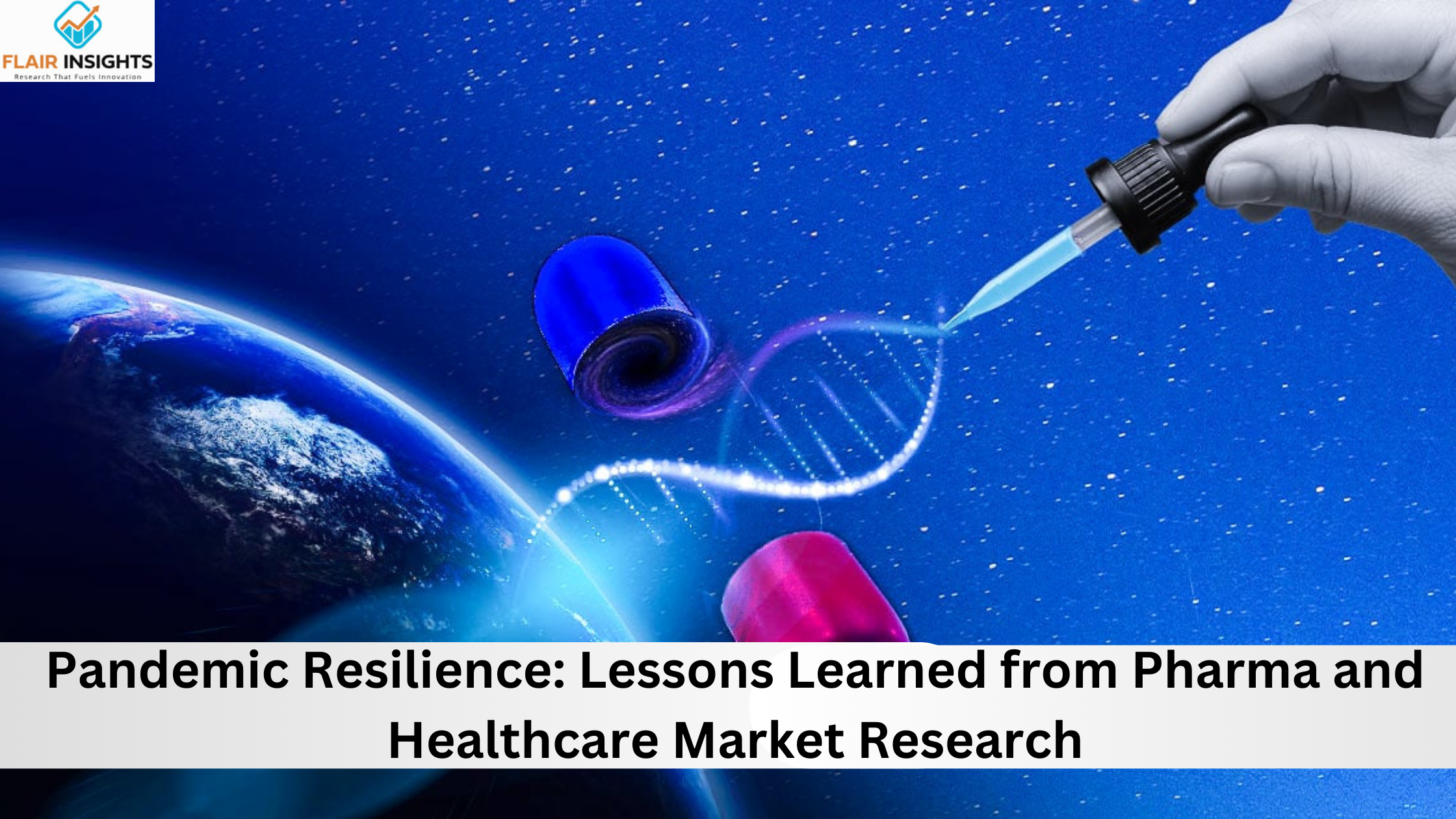
The COVID-19 pandemic has brought massive changes in the pharmaceutical and healthcare industries, pushing them to adapt as never before. The lessons learned from this important time give us valuable information to make these sectors stronger against future problems. This article looks at the main lessons learned from Pharma and Healthcare Market Research during the pandemic.
1. Agility in Drug Development:
The accelerated pace of drug development during the pandemic showcased the industry's agility. Research into the market was identified as vital during this process. As scientists and researches meticulously perused through scientific papers; actively highlighting potential drug candidates and clinical trials, they incited their focus on the best options. Also, knowledge of the market needs and rules helps to make the processes easier without any harm to safety and effectiveness. The lessons learned show how it is very important to keep watching the market for quick, informed choices in drug development. The fast-moving nature of new challenges facing the pharmaceutical industry underscores the importance of constant market research. Through constant scrutiny of scientific studies, keeping an eye on current clinical trials, and staying attuned to market needs, companies can identify new ways to develop drugs and continue meeting emerging healthcare needs.
2. Digital Transformation:
The pandemic pushed the healthcare sector to quickly change to digital technology. Telemedicine, remote patient monitoring, and digital health platforms became very important for continuing care. Market research acted like a compass in this digital change; knowing what patients want and checking if technology is ready became very key in finding out what can stop people from using it to create good digital health plans. Adjusting to fast changes in the digital world shows how important it is to keep on doing market research to support long-lasting, patient-focused digital health solutions.
Market research in digital health should look beyond the current needs to predict future trends. Continuing study on improvements in technology, acceptability of patients towards digital solutions, and changing regulations are crucial factors for keeping pace in a fast-changing digital world of healthcare.
3. Supply Chain Resilience
Global issues highlighted the vulnerabilities in both pharmaceutical and healthcare supply chains. It was very important for market research to study risk and find opportunities for diversification and localization. In turn, by studying the suppliers, checking the political risks, and understanding the changes in the market, one would make intelligent choices regarding supply chain strength. This pandemic taught people that market research has to be done early in order to predict and minimize risks and assure a strong and stable supply chain.
Market research needs to also look at new technologies such as blockchain and advanced analytics in order to strengthen supply chains. Keeping an eye on global political events and changes in rules will be essential to create flexible and responsive supply chain plans.
4. Patient-Centric Approaches:
This pandemic made it clear: an increased focus on patients in healthcare is important. Market research used to get information about the needs, preferences, and concerns of patients. Patient information was used to develop better options and ways to include patients more. This is a lesson indicating that market research is still significant for developing patient-centered ideas and assuring that healthcare solutions are positioned to meet the changeable needs and experiences of patients.
Market research should look beyond merely age, gender, or background. It also should include differences in culture, economic situations, and lifestyle choices, which affect what patients want. Up-to-date ongoing information can be derived from feedback of the patient through surveys, interviews, and social media. This way, drug companies and other healthcare providers understand changing needs.
5. Collaboration and Partnerships:
The crisis highlighted the importance of teamwork in the industry. Pharma companies, research institutions, and regulatory authorities joined forces to expedite vaccine development and distribution. Market research was very important to identify possible partners, check partnership chances, and appraise how collaborative efforts work. The ability to create and keep good partnerships is paramount to the strength of this industry, outlining that market research should remain a key component in the decision-making process regarding collaborations. Market research should focus on the identification of new players, verifying compatibility in the potential partnership and learning about rules and laws guiding such partnership. By habitually monitoring industry trends and competition, opportunities for good partnership initiatives can be identified.
6. Remote Clinical Trials
Huge issues occurred in traditional clinical trials throughout all lockdowns, meaning it was very important to do remote trials. The market research that was done helped understand if patients wanted to join the trials, what rules they would be prepared to tolerate, and any technology that was needed duly. Having this knowledge greatly eased the effective conduct of remote clinical trials. The experiences illustrate how market research guides changes in clinical studies if a situation arises and ensures the continuity of medical research. To optimize remote clinical trials, market research should scrutinize patient experience to identify challenges and opportunities for improvement. Keeping abreast of new technologies and regulatory changes will be key to taking a lead in methods for remote trials.
7. Public Health Communication:
Proper management of the pandemic called for effective communication. Knowledge of what people felt, their fears, and hence information needs was facilitated by market research. Clear, caring, focused public health messages that connected to the public were made from correcting false information so that people followed health guidelines. The lesson learned shows that market research also remains key to maintaining effective communication in the wake of changing feelings of the public and their information needs.
Advanced tools for feelings analysis, interventions using social media trends, and continuous surveys to understand public perception are necessary in the market research for public health communication strategies. The approach in which changes to mass media work and adapt communication strategies to the handling of crises will be significant in the outcome.
8. Preparing for Emerging Pandemics:
The pandemic underscored the importance of preparedness for future crises. The market study will also help in finding out potential risks, identify certain weaknesses, and also provide alternative plans in advance. Understanding the market regarding medical supplies, drugs, and healthcare services has become very crucial in making a robust system to deal with sudden mishaps. Lessons learnt indicate that market research are very relevant in planning for the future so that the industry can sustain and thrive during impending pandemics. Research would improve readiness for disaster through the use of scenario planning approaches. Good preparedness strategies should be able to respond to the diversity of challenges that global health trends, forming of governments, and emerging technologies may present.
Conclusion:
The drug and healthcare industries came out of the COVID-19 pandemic with important lessons that will influence their plans for years to come. Flexibility in drug development using digital tools, resilience in delivering supplies, patient-centric approaches together with partner collaboration for clinical testing, remote monitoring strategies, and good communication are areas that would help solve specific problems created by the pandemic and also help to create a stronger and more flexible healthcare system for the future. The continuous integration of market research will be paramount in navigating the evolving landscape and proactively addressing future challenges. As the industry evolves, a commitment to ongoing market research will be the linchpin for sustained resilience and innovation.
Trending Posts

The Future of Artificial Intelligence
In recent years, the field of artificial intelligence (AI) has witnessed unprecedented growth and transformative advancements. As AI technologies

Global Silver Nanoparticles Market
The global silver nanoparticles market was valued at $2.08 billion in 2020, and is projected to reach $4.1 billion by 2027, growing at a CAGR of ~17%

Vaccination: Vaccination Against Measles is Now Mandatory in Germany
The subject of compulsory vaccination has always heated peoples minds and caused emotionally charged discussions. The latest law in this area - the ob

Sailing into the future with Autonomous Ships
Autonomous Vehicles (AVs) are the uproar of this era. After airways, thanks to the companies like Tesla, that people are now getting used to see drive

The Basic Pension Comes - Federal Cabinet Decides On the Pension Supplement
Financial security in old age is an issue that is causing stomach pains for more and more people in Germany. Low-wage earners fear the elderly. The ba

"LNG Bunkering" Here is something you must know!
In the current scenario of growing pollution, companies are trying to adapt more and more sustainable approach that not only gives eco-friendly result

Fact check on UV Disinfection for COVID-19
Many regulatory authorities and bodies believe that UV disinfection technologies can play a role in a multiple barrier approach to reducing the transm

Rapidly growing IT industry coupled with the trend of bringing your own device (BYOD) is expected to provide new opportunities for growth of Cloud Collaboration
Cloud collaboration is the process of sharing and co-authoring the computer-based work through cloud technology

Rising Demand For Uninterrupted Power Supply Is Expected To Drive The Power Rental Market
Todays world is totally reliant on electric power. There are many things which are not manageable without electricity. Power rental is a concept where
The Global Ventilator Market Grows at a CAGR of 7.75 %
The Global Ventilator Market, which was at $688 million in the year 2016, is about to double by the year 2025, and reach a value of $1,347 million. Th
Recent Posts

The Wellness Renaissance: Gen Z and Millennials Drive the Next Wave of Consumer Innovation
The wellness landscape is undergoing a generational transformation. No longer a domain reserved for luxury or corrective health, wellness has become a foundational lifestyle

Diabetes Prevention: A Strategic Imperative for Economic and Market Growth
As global economies grapple with the dual challenges of maintaining workforce productivity and controlling public health costs, the rise of diabetes—particularly type 2—has emerged as a silent disruptor.

How Drones Are Reshaping the Future of Modern Warfare
The contemporary battlefield is undergoing a paradigm shift, driven not by sheer manpower or conventional firepower, but by the silent hum of Unmanned Aerial Vehicles (UAVs)

Adapting to Gen Z: Strategies for Retail Success in the Digital Age
Generation Z—individuals born between 1997 and 2012—is fast becoming the most influential cohort in the consumer marketplace.

Cross-Border Conflict and Economic Instability in South Asia
In 2025, the subcontinent witnessed a perilous turn in India-Pakistan relations following a deadly terrorist incident in Pahalgam, which claimed 26 lives.

Transforming Market Research: The Strategic Impact of Generative AI
In a data-driven economy, market research has become a mission-critical function for organizations seeking sustained growth.

Gold at Historic Highs in 2025: Strategic Implications of a Flight to Safety
Gold has reached unprecedented valuation levels in 2025, crossing $3,175 per ounce globally and nearing ₹94,000 per 10 grams in India—a 23% increase year-to-date

The Escalating U.S.-China Trade War: Strategic Implications for the Global Economy in 2025
In 2025, the U.S.-China trade war has reached an inflection point, introducing heightened complexity and volatility into the global economic system.

Tariffs & Trade: Key Trends, Policies, and Market Impact
A tariff is a tax imposed by a government on imported or exported goods. It is primarily used to regulate international trade by either encouraging domestic production or generating revenue for the government.

The Global Buy Now Pay Later (BNPL) Market: Growth and Opportunities
The global Buy Now Pay Later (BNPL) market has emerged as a revolutionary financial solution, transforming how consumers approach shopping and payments. Offering flexibility and convenience, BNPL allows consumers to make purchases and pay.