.png)
How Drones Are Reshaping the Future of Modern Warfare
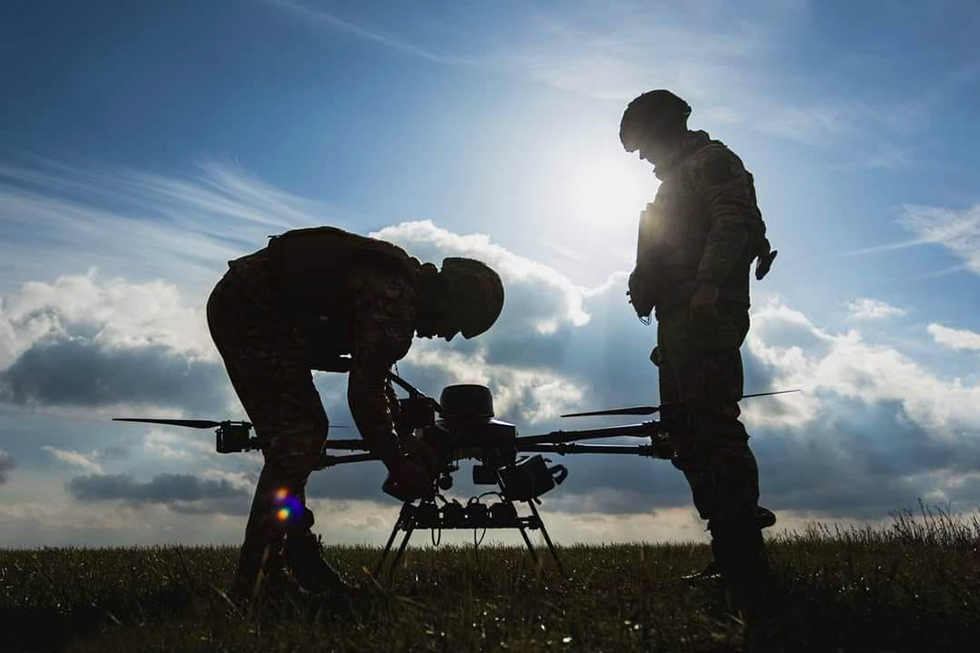
The contemporary battlefield is undergoing a paradigm shift, driven not by sheer manpower or conventional firepower, but by the silent hum of Unmanned Aerial Vehicles (UAVs)—more commonly known as drones. What originated as experimental reconnaissance tools has matured into a decisive force multiplier in modern military doctrine. Drones are no longer peripheral; they sit at the epicenter of tactical and strategic planning across global armed forces.
From Eyes in the Sky to Precision Weapons
Initially, drone technology served as an extension of human vision—offering surveillance capabilities that eliminated the need for manned reconnaissance flights over hostile territory. However, advancements in flight stability, payload integration, and AI-enhanced targeting have elevated drones from passive observers to active combat participants.
Armed drones now execute high-precision strikes from thousands of miles away, reshaping the rules of engagement. For instance, counterterrorism operations that once required boots on the ground now leverage drones to neutralize threats with surgical accuracy, minimizing collateral damage and reducing operational risks.
Tactical Leverage in Modern Conflict Zones
The 2022 Ukraine conflict offers a vivid case study. Both Ukrainian and Russian forces have deployed UAVs for artillery spotting, logistics tracking, and even direct attacks. What’s notable is Ukraine’s innovative adaptation of commercial drones into tactical assets—demonstrating that even asymmetric forces can harness UAVs to offset traditional military disadvantages.
Similarly, in Middle Eastern combat zones, drones have become indispensable. They secure supply routes, monitor insurgent activity, and deliver kinetic payloads—all with a cost-efficiency unmatched by conventional aircraft. The declining cost barrier, coupled with scalable deployment, makes drones accessible to both state and non-state actors.
The Backbone: Satellite Connectivity and AI Integration
A drone’s utility is amplified by its ecosystem—especially satellite communication and artificial intelligence. Through satellite links, Beyond Visual Line of Sight (BVLOS) operations become possible, enabling drones to function over vast, remote geographies with uninterrupted real-time feedback.
Artificial intelligence is pushing UAV capabilities further. AI-infused drones can now identify patterns, track targets autonomously, and recalibrate their flight paths in real-time. These intelligent systems are evolving toward autonomous mission execution, which substantially compresses decision timelines—a critical advantage in time-sensitive combat scenarios.
Strategic Advantages: Redefining Military Asymmetry
Drones deliver both tactical and strategic dividends:
Stealth Penetration: Small UAVs are difficult to detect and intercept, ideal for infiltration missions in contested airspace.
Persistent ISR (Intelligence, Surveillance, Reconnaissance): Unlike manned missions, drones can loiter for hours or days, feeding continuous data to command centers.
Payload Flexibility: Modular bays allow drones to carry a spectrum of tools—from high-definition cameras to electronic warfare gear and lethal ordnance.
Low Logistical Footprint: Rapid deployment capabilities make UAVs a fit for agile, mission-critical scenarios.
Strategically, drones embody the shift toward low-cost, high-impact warfare. Their versatility extends beyond combat—into disaster response, humanitarian supply drops, and post-disaster reconnaissance—underscoring their growing role in multidomain operations.
Navigating Ethical and Legal Terrain
However, the technological leap forward raises complex questions. Who bears accountability when a drone strike results in civilian casualties? What legal frameworks govern the use of autonomous lethal systems?
Current international law struggles to keep pace. Cross-border strikes often blur sovereignty lines, and automated targeting introduces ethical quandaries surrounding machine decision-making. The call for robust governance frameworks—akin to the Geneva Conventions but tailored for digital-age warfare—is intensifying among global policymakers.
Swarm Tactics: A Glimpse into Future Combat
Perhaps the most disruptive innovation on the horizon is drone swarming—an approach where dozens or even hundreds of UAVs operate in coordinated harmony. These swarms, driven by AI, can saturate enemy defenses, execute distributed attacks, and conduct wide-area surveillance with unmatched efficiency.
Swarms introduce complexity for air defense systems designed to counter large, singular threats. By decentralizing threat vectors, swarms demand a fundamental rethink of defense architectures—ushering in a new era of algorithmic warfare.
Counter-Drone Capabilities: The Emerging Arms Race
As drones become ubiquitous, so too does the imperative to defend against them. Military and civilian stakeholders are investing heavily in counter-UAV systems:
Electronic Jamming: Disrupts communication links, forcing drones to crash or return to base.
Directed Energy Weapons: Lasers and microwave systems offer silent, swift drone neutralization.
Physical Interceptors: Nets, trained birds, and small interceptors are deployed to take drones out mid-flight.
These defense systems are now standard for protecting critical infrastructure, military bases, and public events—underscoring the dual-edged nature of drone proliferation.
Civil-Military Technology Overlap: A Double-Edged Sword
The convergence of civilian and military drone technologies creates a volatile mix. Commercially available drones are increasingly used in battlefield settings—blurring the line between civilian tech and military-grade hardware. While this democratization fosters innovation, it also introduces regulatory challenges.
Non-state actors can easily acquire, modify, and weaponize off-the-shelf drones, complicating threat detection and attribution. This “dual-use dilemma” underscores the need for stricter controls and international collaboration on drone tracking and licensing.
Future Trajectory: Toward Autonomous Warfare
Looking ahead, the trajectory of drone warfare points to deeper integration and broader functionality:
Autonomous Strike Platforms: Emerging drones will carry out entire missions independently—identifying, targeting, and engaging threats without real-time human input.
Manned-Unmanned Teaming (MUM-T): Joint missions where UAVs support piloted aircraft with reconnaissance, jamming, or direct fire roles.
Cross-Domain Expansion: Drones are moving beyond the sky—into underwater (UUVs) and ground (UGVs) applications, enabling seamless, multidomain operational strategies.
These trends signal a shift from drone-assisted warfare to drone-dominant warfare—a future where autonomous systems are not just supporting actors but central protagonists.
Conclusion: Rethinking the Battlefield
Drones are reshaping modern warfare not incrementally, but fundamentally. Their cost-efficiency, risk reduction, and tactical precision are recalibrating the military value chain. As AI integration deepens and swarm capabilities mature, drones will transition from supportive tools to primary combat systems.
Nations that embed UAV strategies into broader defense modernization programs will be better equipped to project power, maintain readiness, and respond rapidly to dynamic threats. But with this evolution comes responsibility—ensuring that technological advancement is matched with ethical foresight, legal clarity, and strategic restraint.
In the theater of modern conflict, superiority will belong not to those with the most assets, but to those who wield emerging technologies with intelligence, responsibility, and vision.
Trending Posts

The Future of Artificial Intelligence
In recent years, the field of artificial intelligence (AI) has witnessed unprecedented growth and transformative advancements. As AI technologies

Global Silver Nanoparticles Market
The global silver nanoparticles market was valued at $2.08 billion in 2020, and is projected to reach $4.1 billion by 2027, growing at a CAGR of ~17%

Vaccination: Vaccination Against Measles is Now Mandatory in Germany
The subject of compulsory vaccination has always heated peoples minds and caused emotionally charged discussions. The latest law in this area - the ob
Sailing into the future with Autonomous Ships
Autonomous Vehicles (AVs) are the uproar of this era. After airways, thanks to the companies like Tesla, that people are now getting used to see drive

The Basic Pension Comes - Federal Cabinet Decides On the Pension Supplement
Financial security in old age is an issue that is causing stomach pains for more and more people in Germany. Low-wage earners fear the elderly. The ba

"LNG Bunkering" Here is something you must know!
In the current scenario of growing pollution, companies are trying to adapt more and more sustainable approach that not only gives eco-friendly result

Fact check on UV Disinfection for COVID-19
Many regulatory authorities and bodies believe that UV disinfection technologies can play a role in a multiple barrier approach to reducing the transm

Rapidly growing IT industry coupled with the trend of bringing your own device (BYOD) is expected to provide new opportunities for growth of Cloud Collaboration
Cloud collaboration is the process of sharing and co-authoring the computer-based work through cloud technology

Rising Demand For Uninterrupted Power Supply Is Expected To Drive The Power Rental Market
Todays world is totally reliant on electric power. There are many things which are not manageable without electricity. Power rental is a concept where

The Global Ventilator Market Grows at a CAGR of 7.75 %
The Global Ventilator Market, which was at $688 million in the year 2016, is about to double by the year 2025, and reach a value of $1,347 million. Th
Recent Posts

The Wellness Renaissance: Gen Z and Millennials Drive the Next Wave of Consumer Innovation
The wellness landscape is undergoing a generational transformation. No longer a domain reserved for luxury or corrective health, wellness has become a foundational lifestyle

Diabetes Prevention: A Strategic Imperative for Economic and Market Growth
As global economies grapple with the dual challenges of maintaining workforce productivity and controlling public health costs, the rise of diabetes—particularly type 2—has emerged as a silent disruptor.

Adapting to Gen Z: Strategies for Retail Success in the Digital Age
Generation Z—individuals born between 1997 and 2012—is fast becoming the most influential cohort in the consumer marketplace.

Cross-Border Conflict and Economic Instability in South Asia
In 2025, the subcontinent witnessed a perilous turn in India-Pakistan relations following a deadly terrorist incident in Pahalgam, which claimed 26 lives.

Transforming Market Research: The Strategic Impact of Generative AI
In a data-driven economy, market research has become a mission-critical function for organizations seeking sustained growth.

Gold at Historic Highs in 2025: Strategic Implications of a Flight to Safety
Gold has reached unprecedented valuation levels in 2025, crossing $3,175 per ounce globally and nearing ₹94,000 per 10 grams in India—a 23% increase year-to-date

The Escalating U.S.-China Trade War: Strategic Implications for the Global Economy in 2025
In 2025, the U.S.-China trade war has reached an inflection point, introducing heightened complexity and volatility into the global economic system.

Tariffs & Trade: Key Trends, Policies, and Market Impact
A tariff is a tax imposed by a government on imported or exported goods. It is primarily used to regulate international trade by either encouraging domestic production or generating revenue for the government.

The Global Buy Now Pay Later (BNPL) Market: Growth and Opportunities
The global Buy Now Pay Later (BNPL) market has emerged as a revolutionary financial solution, transforming how consumers approach shopping and payments. Offering flexibility and convenience, BNPL allows consumers to make purchases and pay.

Global Motorhome Market: Growth and Forecast
The motorhome market has gained significant momentum over the past decade, driven by rising interest in outdoor tourism, evolving consumer lifestyles, and advancements in vehicle design and technology. As a preferred option for travelers seeking.