.png)
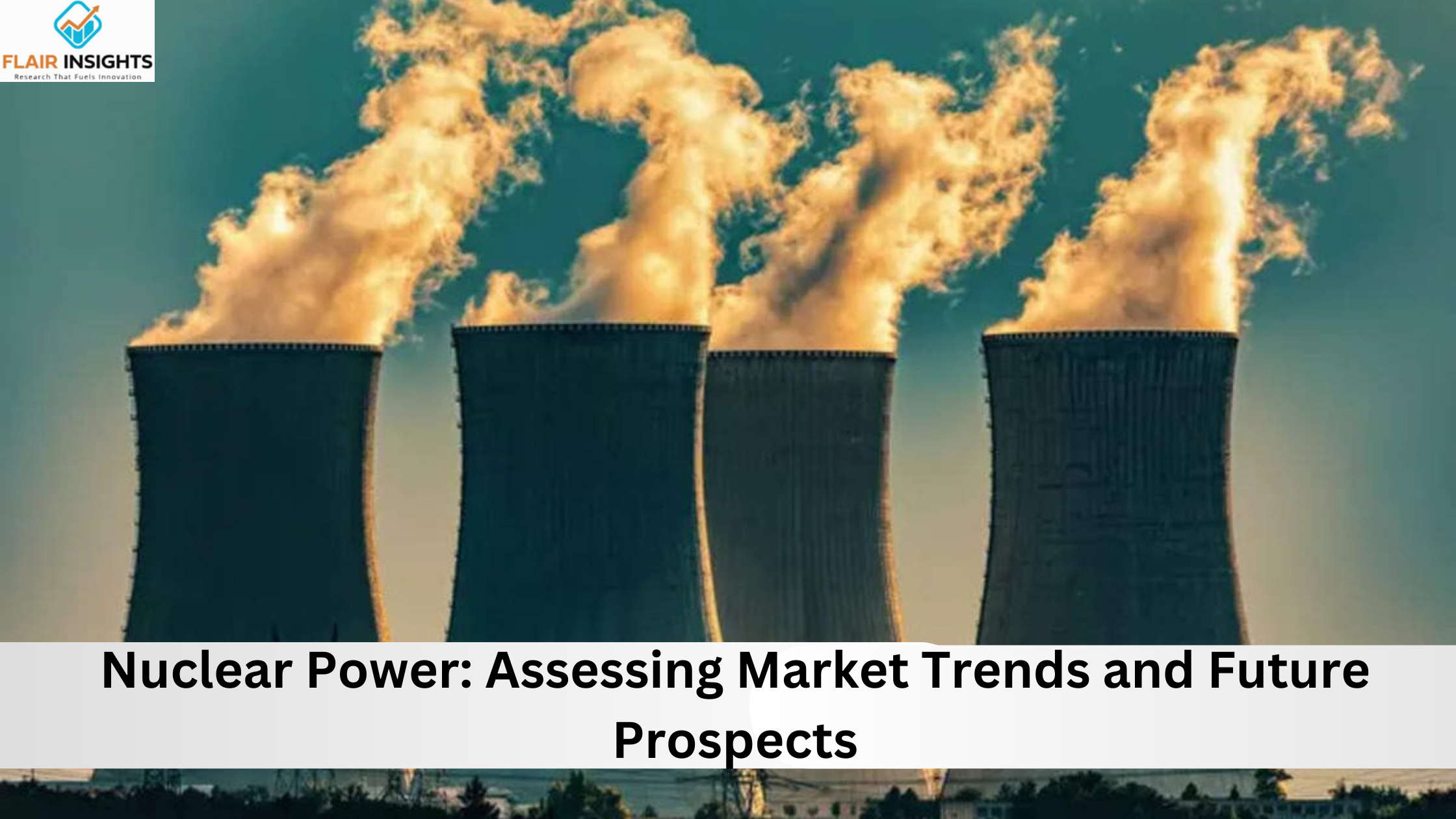
For decades, nuclear power has formed an integral part of the world energy scene because of its prowess in supplying a reliable base load of electricity. This paper contributes to the current market trends and prospects for nuclear power in terms of existing challenges, improved technologies, its role in the clean energy transition, global policies, economic factors, and the most important aspect public perception. While handling such dynamics, the sector is trying to balance a stable source of energy supply with concerns of safety, cost, and environmental impacts. The future of nuclear power depends on evolving market demands and cultivating innovation and public sentiment.
1. The Current State of Nuclear Power
1.1 Global Nuclear Capacity
As of current year nuclear power contributes a great deal to worldwide electricity generation. Large fractions of electricity production in the United States, China, and Russia come from nuclear plants. We will discuss the present nuclear capacity of the world by focusing on the geographical distribution of nuclear plants and their contribution to the energy mix.
1.2 Challenges Faced by the Nuclear Industry
Though the nuclear industries contributed a lot, there are some challenges to the industry pertaining to growth and public acceptance. Some of these challenges include high construction costs, concerns over nuclear accidents, and radioactive waste disposal. We analyze these challenges in this section and the implications they hold for the future of nuclear power.
2. Technological Advancements in Nuclear Energy
2.1 Advanced Reactor Designs
Innovation in nuclear reactor design is gaining momentum with promises to solve problems that have plagued the industry from the beginning. SMRs and Generation IV reactors are new designs that offer the potential to take big steps forward in safety, efficiency, and flexibility. This chapter will explore these innovative reactor designs and what they could potentially mean for the future of nuclear power.
2.2 Safety Measures and Protocols
The nuclear industry has moved ahead, first by improving reactor designs, followed by passive safety systems, and concluded with stringent protocols mitigating risks. Such measures are intended to improve the safety record of the industry and have a positive effect on public perception of nuclear energy. A review of these enhanced safety measures not only underlines the commitment to addressing concerns but also contributes to fostering a secure and more favorable environment for the continued development of nuclear power.
3. Nuclear Power in the Context of Clean Energy Transition
3.1 Nuclear Power and Carbon Emissions
As the world attempts to move to cleaner energy sources to fight climate change, nuclear power is thrust to the forefront of what could be expected to significantly reduce carbon emissions. Nuclear power is low carbon energy hence, we now try to find out what it would potentially add towards the attainment of the climate goals compared to other sources of energy.
3.2 Integration with Renewable Energy
The current trend is a combination of nuclear power with renewable energy sources, whereby nuclear power synergism with renewables assures a secure, stable, and reliable energy mix that is going to assure the resolution of intermittency issues. This section assesses how nuclear power may gain as a result of complementing and supporting the growth of renewable energy.
4. Global Nuclear Policies and Regulatory Landscape
4.1 Government Support and Incentives
Government policies and incentives will determine the future of nuclear power. Several countries are incorporating nuclear power in their overall energy strategies. We are going to analyze present nuclear policies around the world, with the main emphasis on government support and incentives, and the geopolitical factors that might affect the nuclear scene.
4.2 Regulatory Challenges and Safety Standards
Therefore, the nuclear industry is very sensitive to safety issues with respect to safe operations of nuclear power plants. The section deals with the challenges the industry faces in meeting such stringent standards and analyzes the dynamic nature of the regulatory environment. It estimates how regulation changes might impact the realization of nuclear power projects and, in the process, puts to the fore the needs for adaptability and compliance that must be in place if the projects are to sustainably progress within the changing regulatory environment.
5. Economic Considerations and Financing Nuclear Projects
5.1 Construction Costs and Project Financing
Review of the economic considerations for new nuclear plants, examination of innovative financing models, and assessment of the impacts of high upfront construction costs on the competitiveness of nuclear energy all these make up one of the major economic challenges to nuclear power projects.
5.2 Cost Competitiveness and Market Dynamics
The competitiveness of the cost at which nuclear power energy is offered, as compared to other sources, becomes a very important factor in the market prospects. We analyze the market dynamics in light of evolving energy markets and competition from renewable sources, all the while investigating if nuclear can maintain competitiveness.
6. Public Perception and Social Acceptance
6.1 Communication and Public Engagement
Essentially, the future of nuclear power depends on how the world views it; the right strategies on communication and engagement are therefore required. Subtle approaches that convey trust and understanding are needed to be employed by the nuclear industry. This chapter discusses some of the methods used by the sector in an attempt to communicate the benefits and risks associated with nuclear power to the public. By opening lines of communication and becoming more transparent, the industry aims to allay fears, clarify any misinformation, and lay down the very foundation needed for trust a precondition when one is sailing through treacherous waters of public opinion.
6.2 Community Involvement and Stakeholder Collaboration
Another factor that is of key importance to the success of nuclear projects is the involvement of local communities and stakeholders. This section discusses the role played by local communities, transparency, and collaboration in winning social acceptance. This section will use case studies to explore successful initiatives in community engagement and their impact on the development of nuclear projects.
7. Conclusion
The future of atomic energy stands on diversified ground, influenced by technology, the pursuit of clean energy, various policies around the world, economic factors, and public perception. Even amidst the existing challenges, some very promising innovations in reactor designs, safety protocols, and waste management present workable solutions. Nuclear power can play a lead role in combating climate related goals and might even synergize with renewable sources of energy. Further on the way forward, finding a balanced and well informed way will be important as governments, industries, and communities work in tight cooperation towards overcoming these challenges. Such cooperation will unlock the full potential of nuclear power to meet sustainable and reliable energy supply into the future, fixing it as an irreplaceable component of the upcoming mix. It will be the common pursuit of responsibility and innovation that charts the course forward for nuclear power and, therefore, importantly sets the stage for a more sustainable and resilient global energy infrastructure.
Trending Posts

The Future of Artificial Intelligence
In recent years, the field of artificial intelligence (AI) has witnessed unprecedented growth and transformative advancements. As AI technologies

Global Silver Nanoparticles Market
The global silver nanoparticles market was valued at $2.08 billion in 2020, and is projected to reach $4.1 billion by 2027, growing at a CAGR of ~17%

Vaccination: Vaccination Against Measles is Now Mandatory in Germany
The subject of compulsory vaccination has always heated peoples minds and caused emotionally charged discussions. The latest law in this area - the ob

Sailing into the future with Autonomous Ships
Autonomous Vehicles (AVs) are the uproar of this era. After airways, thanks to the companies like Tesla, that people are now getting used to see drive

The Basic Pension Comes - Federal Cabinet Decides On the Pension Supplement
Financial security in old age is an issue that is causing stomach pains for more and more people in Germany. Low-wage earners fear the elderly. The ba
"LNG Bunkering" Here is something you must know!
In the current scenario of growing pollution, companies are trying to adapt more and more sustainable approach that not only gives eco-friendly result
Fact check on UV Disinfection for COVID-19
Many regulatory authorities and bodies believe that UV disinfection technologies can play a role in a multiple barrier approach to reducing the transm

Rapidly growing IT industry coupled with the trend of bringing your own device (BYOD) is expected to provide new opportunities for growth of Cloud Collaboration
Cloud collaboration is the process of sharing and co-authoring the computer-based work through cloud technology

Rising Demand For Uninterrupted Power Supply Is Expected To Drive The Power Rental Market
Todays world is totally reliant on electric power. There are many things which are not manageable without electricity. Power rental is a concept where
The Global Ventilator Market Grows at a CAGR of 7.75 %
The Global Ventilator Market, which was at $688 million in the year 2016, is about to double by the year 2025, and reach a value of $1,347 million. Th
Recent Posts

The Wellness Renaissance: Gen Z and Millennials Drive the Next Wave of Consumer Innovation
The wellness landscape is undergoing a generational transformation. No longer a domain reserved for luxury or corrective health, wellness has become a foundational lifestyle

Diabetes Prevention: A Strategic Imperative for Economic and Market Growth
As global economies grapple with the dual challenges of maintaining workforce productivity and controlling public health costs, the rise of diabetes—particularly type 2—has emerged as a silent disruptor.

How Drones Are Reshaping the Future of Modern Warfare
The contemporary battlefield is undergoing a paradigm shift, driven not by sheer manpower or conventional firepower, but by the silent hum of Unmanned Aerial Vehicles (UAVs)

Adapting to Gen Z: Strategies for Retail Success in the Digital Age
Generation Z—individuals born between 1997 and 2012—is fast becoming the most influential cohort in the consumer marketplace.

Cross-Border Conflict and Economic Instability in South Asia
In 2025, the subcontinent witnessed a perilous turn in India-Pakistan relations following a deadly terrorist incident in Pahalgam, which claimed 26 lives.

Transforming Market Research: The Strategic Impact of Generative AI
In a data-driven economy, market research has become a mission-critical function for organizations seeking sustained growth.

Gold at Historic Highs in 2025: Strategic Implications of a Flight to Safety
Gold has reached unprecedented valuation levels in 2025, crossing $3,175 per ounce globally and nearing ₹94,000 per 10 grams in India—a 23% increase year-to-date

The Escalating U.S.-China Trade War: Strategic Implications for the Global Economy in 2025
In 2025, the U.S.-China trade war has reached an inflection point, introducing heightened complexity and volatility into the global economic system.

Tariffs & Trade: Key Trends, Policies, and Market Impact
A tariff is a tax imposed by a government on imported or exported goods. It is primarily used to regulate international trade by either encouraging domestic production or generating revenue for the government.

The Global Buy Now Pay Later (BNPL) Market: Growth and Opportunities
The global Buy Now Pay Later (BNPL) market has emerged as a revolutionary financial solution, transforming how consumers approach shopping and payments. Offering flexibility and convenience, BNPL allows consumers to make purchases and pay.